How to Choose the Best Foya Solar Battery for Global Buyers?
Choosing a solar battery for international projects is no longer a simple matter of comparing capacity and price. Buyers must evaluate safety, usable energy, cycle life, warranty terms, certification, and local service support. The Foya Solar Battery should be assessed against these practical requirements, not only its product brochure.
The market is expanding quickly. The International Energy Agency reports that global energy storage capacity must increase sixfold by 2030 under its net-zero pathway. This growth reflects rising solar deployment and greater demand for reliable power after sunset. IRENA’s cost analysis also shows that battery storage costs have declined substantially over the past decade, although prices still vary by chemistry, region, shipping, and installation conditions. Lower costs do not automatically mean better value.
Real-world selection requires careful testing. A battery installed beside a dusty warehouse in Kenya faces different conditions from one placed in a temperature-controlled European utility room. Buyers should examine lithium chemistry, thermal management, ingress protection, inverter compatibility, monitoring software, and replacement procedures. A clear warranty matters, but its exclusions matter more. Small details can become expensive problems.
Foya Solar Battery may suit different applications, from residential backup to commercial solar storage, but performance depends on correct sizing and installation. Buyers should request verified test data, safety documentation, and references from comparable projects. Some specifications remain difficult to compare fairly. That is worth admitting. A reliable decision combines published evidence with field experience, independent inspection, and realistic expectations about climate, load patterns, and maintenance.
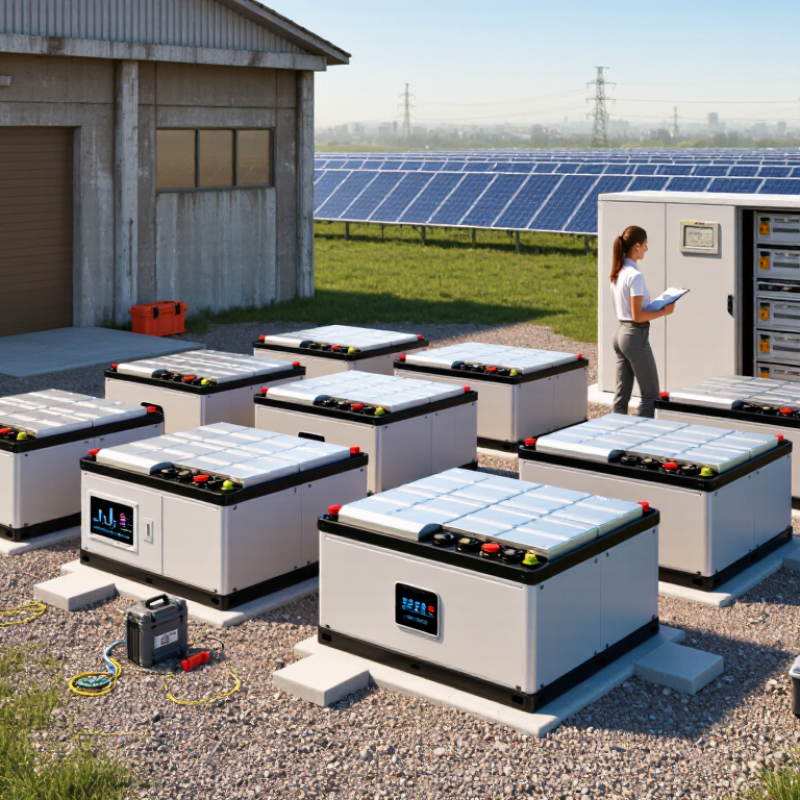
Define Foya Battery Chemistry: LiFePO₄ Delivers 3,000–6,000 Cycles
For global buyers, battery chemistry strongly affects service life, safety, and maintenance planning. LiFePO₄ batteries commonly deliver 3,000–6,000 cycles under suitable operating conditions. That range matters for homes, backup systems, and small commercial sites. A cycle means one complete discharge and recharge, not necessarily one day. Not a calendar year.
In practical installations, usable life depends on depth of discharge, temperature, charging quality, and battery management software. A battery discharged to 80% daily may age differently from one used at 50%. Keeping the unit cool helps reduce capacity loss. Heat remains a serious concern. Cold charging also requires careful control. Look for a tested battery management system, balanced cells, clear protection limits, and published cycle-test conditions. Vague cycle claims deserve questions.
For a remote solar project, I would compare warranty terms with the expected daily load, not only the headline cycle number. Ask whether the 3,000–6,000 cycles were measured at a specific temperature, discharge rate, and capacity-retention level. Real-world results vary. The cheapest battery may cost more after repeated replacements. An honest specification sheet should explain limitations, including reduced performance in harsh climates. I may still want independent test evidence, because even detailed documents can miss installation mistakes. A shaded, ventilated enclosure and correctly matched charger often matter as much as the chemistry itself.
Compare Capacity and Usable Energy: Calculate kWh from Daily Loads
How to Choose the Best Foya Solar Battery for Global Buyers?
Compare Capacity and Usable Energy: Calculate kWh from Daily Loads
Choosing a solar battery starts with your daily electricity loads, not its advertised capacity. List each appliance, its wattage, and daily operating hours. Then use this formula: watts × hours ÷ 1,000 = daily kWh. A 100-watt refrigerator running for eight hours uses about 0.8 kWh. Lighting, fans, routers, and pumps should be calculated separately.
Add the loads together. For example, a home using 3.2 kWh daily may need more than a 3.2 kWh battery. Usable energy depends on the battery’s depth of discharge and system efficiency. With 90% usable depth and 90% efficiency, a 5 kWh battery provides roughly 4.05 kWh for real loads. The calculation is 5 × 0.9 × 0.9. Small losses matter.
I have seen early estimates fail because standby consumption was ignored. Chargers and inverters can draw power overnight. Seasonal sunlight also changes charging performance across regions. For dependable sizing, multiply daily demand by the desired backup days, then allow a modest reserve. A 3.2 kWh load needing two days requires 6.4 kWh of usable energy. If only 81% of rated capacity is usable, the rated battery capacity should be about 7.9 kWh. That may still be imperfect. Actual results depend on temperature, battery age, cable losses, and load surges.
Evaluate Efficiency and Performance: Target 90–95% Round-Trip Efficiency
When choosing a solar battery, round-trip efficiency deserves careful attention. It measures energy retained after charging and discharging. A 90% result means 10 kWh of solar input delivers about 9 kWh later. The U.S. National Renewable Energy Laboratory’s 2024 Annual Technology Baseline models approximately 85% round-trip efficiency for battery storage systems. For global buyers, targeting 90–95% can therefore indicate stronger system performance.
A high rating is not enough. Ask whether the figure includes the inverter, battery management system, cooling, and standby consumption. Some suppliers report cell-level efficiency only, which can appear impressive but mislead system owners. The U.S. Department of Energy’s Energy Storage Grand Challenge emphasizes evaluating complete systems, operating conditions, and lifetime performance. Request test results at realistic temperatures, especially around 10°C and 35°C. Hot rooms change the story.
Check usable capacity, not only nameplate capacity. A 10 kWh battery with 90% efficiency may provide roughly 9 kWh, before additional household losses. Frequent partial cycles can also produce different results from laboratory tests. I would compare independent test reports, warranty conditions, degradation assumptions, and measured efficiency at several power levels. The International Energy Agency highlights the growing importance of storage flexibility, but efficiency alone does not guarantee value. A battery with slightly lower efficiency may perform better if it offers reliable thermal control and longer service life. The perfect number is rarely perfect in practice.
How to Choose the Best Solar Battery: Round-Trip Efficiency Benchmark
Round-trip efficiency measures how much energy can be discharged compared with the energy used to charge the battery. For global buyers, a system-level efficiency of 90–95% is a practical target for modern lithium-ion storage systems.
Benchmark values shown are representative of typical lithium-ion solar storage performance under different continuous charge and discharge power levels. Actual results vary with temperature, inverter efficiency, battery age, state of charge, and installation conditions.
Verify Safety and Compliance: Check IEC 62619 and UN 38.3 Certification
For global buyers, selecting a solar battery should begin with verifiable safety evidence, not attractive specifications. In supplier reviews, I examine whether IEC 62619 covers the exact battery model, chemistry, and intended industrial application. This standard addresses safety requirements and tests for lithium cells and batteries used in industrial systems. It does not automatically approve every installation condition. UN 38.3 is equally important for transport. It confirms that the battery design passed required tests for shipping, including vibration, shock, and temperature changes.
Request the certificate, test report, and UN 38.3 test summary. Check the issuing laboratory, report date, model number, and tested capacity. The numbers should match the label on the battery cabinet. A small mismatch matters. Ask whether later firmware, cell changes, or enclosure revisions were included. Some sellers provide a certificate, but not its complete scope. That gap deserves questions, not assumptions. Photographing the nameplate during factory inspection can prevent costly confusion later. If remote inspection is necessary, request live footage and sealed packaging details.
For a realistic review, inspect protection features around overcharge, overheating, short circuits, and abnormal operating conditions. Then compare the installation manual with the planned site. A coastal warehouse, dusty workshop, or unheated winter room may require different controls. UN 38.3 does not replace local electrical, fire, or installation requirements. IEC 62619 does not guarantee perfect quality after years of cycling. I have learned to leave room for uncertainty. Ask about traceability, production testing, maintenance records, and incident procedures before approving the purchase. Good documentation is useful, but observed manufacturing discipline is useful too.
Match Climate and Installation Needs: Assess IP Ratings and −20°C to 55°C Operation
How to Choose the Best Solar Battery for Global Buyers?
Climate should guide your battery choice as much as capacity. In coastal areas, salt mist can enter weak enclosures and corrode terminals. Dusty farms create another problem. Fine particles may settle around vents and connectors.
Check the IP rating carefully. IP65 means protection from dust and water jets. IP66 offers stronger water-jet resistance. IP67 adds temporary immersion protection, but it does not guarantee safe long-term outdoor exposure. A higher rating cannot fix poor installation. Keep cable glands facing downward, provide shade, and avoid low areas where rainwater collects. I have seen well-rated batteries fail after careless mounting.
Tips:
Confirm the real operating range, not only the storage range. A battery rated from −20°C to 55°C can face reduced performance near its limits. In cold climates, charging may require internal heating or battery-management controls. In hot regions, direct sunlight can push the enclosure beyond ambient temperature. Leave ventilation space, but protect the unit from standing water and blocked airflow.
Review local temperature records, humidity, dust, and seasonal extremes. Then compare the battery’s IP test conditions, thermal limits, warranty terms, and installation manual. These details matter more than a dramatic capacity figure. One point remains easy to miss: −20°C operation may describe discharge only. Ask for written charging limits before purchase.






 Tina - International Sales Director