Global sourcing demands more than a competitive battery price. It requires dependable performance, traceable manufacturing, and support that remains available after shipment. Foya Solar Batteries attracts attention because international buyers need storage systems built for different climates, grid conditions, and installation standards.
Energy-storage engineer Dr. Haresh Kamath explains, “A battery is only as strong as the system around it.” This principle matters when evaluating Foya Solar Batteries for residential, commercial, or off-grid projects. Buyers should examine cell chemistry, battery-management systems, cycle-life testing, thermal protection, warranty terms, and documented safety certifications. A battery may look impressive on paper. Real performance depends on design details.
Consider a warehouse in Rotterdam, a remote clinic in Kenya, or a villa in Australia. Each location creates different demands for temperature control, shipping coordination, communication interfaces, and maintenance. Foya Solar Batteries should therefore be assessed through verified specifications, sample testing, production consistency, and responsive technical service. Do not trust attractive numbers alone. That is where sourcing decisions sometimes become weak.
Supplier communication also deserves practical attention. Can the manufacturer provide clear installation guidance? Are replacement parts accessible? Does the warranty process work across borders? These questions reveal operational maturity. Foya Solar Batteries may offer a strong sourcing option, but responsible buyers should confirm every important claim independently. No supplier is perfect. Careful comparison still matters.

Foya Solar Batteries can be assessed through its company profile and product scope. A reliable supplier should show manufacturing experience, testing procedures, and export documentation. Its product range should cover residential storage, commercial backup, and photovoltaic integration. Clear voltage classes and capacity options simplify project matching. Service matters too. Buyers need responsive technical support, spare parts, and warranty terms that remain understandable across markets.
The International Energy Agency reported that global battery storage additions nearly tripled in 2023, reaching about 42 GW. This growth increases demand for safe, scalable, and adaptable battery systems.
IRENA recorded approximately 346 GW of new solar capacity during the same year. Solar expansion creates practical demand for storage during evening peaks, cloudy periods, and unstable grid conditions.
A professional product scope should therefore address cycle life, thermal control, communication protocols, and installation compatibility.
Independent verification remains essential. BloombergNEF reported an average lithium-ion battery pack price of 115 dollars per kWh in 2024, but system prices vary with inverters, certification, logistics, and installation.
Published figures can look impressive. They may not reflect real operating conditions. Buyers should request test reports, safety certifications, temperature data, and field references before placing large orders. A careful review may reveal limitations, yet it also builds a more reliable sourcing decision.
Why Choose Solar Batteries for Global Sourcing?
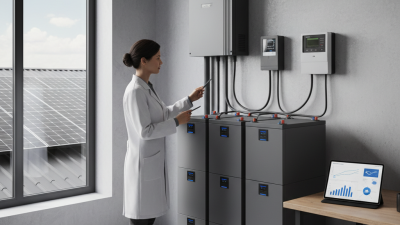
Solar batteries store surplus electricity produced by photovoltaic panels during daylight. The panels generate direct current, while an inverter converts it into usable household or commercial power. A charge controller manages the charging process and helps prevent unsafe voltage levels. The battery management system monitors temperature, current, and cell balance in real time.
The process is quiet. During peak sunlight, the system sends extra energy into the battery instead of exporting all of it to the grid. After sunset, stored power flows back through the inverter. This supports lighting, refrigeration, pumps, and communication equipment when solar production falls. In many installations, lithium iron phosphate cells offer stable performance, strong thermal characteristics, and a long service life. However, battery quality depends on more than cell chemistry.
Installation experience often reveals small details that specifications miss. Cable length, ventilation, humidity, firmware, and inverter compatibility can affect daily output. A battery may show high capacity on paper but deliver less usable energy after reserve limits and conversion losses. Depth of discharge also influences service life. Deeper cycling can increase available energy, yet it may accelerate degradation over time.
Night changes the test. In cold climates, charging may require temperature protection. In hot regions, poor ventilation can reduce efficiency and shorten component life. Sourcing teams should review safety certifications, warranty conditions, replacement support, and local electrical requirements. These checks are not always convenient. They remain essential for reliable renewable energy systems.
| Data Dimension | Typical Data or Specification | How It Works in a Renewable Energy System | Global Sourcing Consideration |
|---|---|---|---|
| Primary battery chemistry | Lithium iron phosphate (LiFePO₄) is widely used for stationary solar storage because of its thermal stability and long cycle life. | Stores electrical energy through reversible movement of lithium ions between the positive and negative electrodes. | Confirm chemistry, cell grade, safety documentation, and applicable transport classification before purchase. |
| Common system voltage | 12.8 V, 25.6 V, 51.2 V, and higher-voltage battery banks are common configurations. | The battery bank voltage must match the inverter, charge controller, protection devices, and system architecture. | Specify nominal voltage, operating voltage range, connector type, and compatibility requirements. |
| Usable depth of discharge | A typical LiFePO₄ system may be designed for approximately 80%–100% depth of discharge, subject to the manufacturer’s limits. | Higher usable capacity allows more of the stored solar energy to be delivered to loads before recharging. | Compare usable energy, not only nominal capacity, and verify warranty conditions at the stated discharge level. |
| Round-trip efficiency | Battery-system round-trip efficiency is commonly about 85%–95%, depending on the battery, inverter, temperature, and operating load. | Some energy is lost during charging, storage management, conversion, and discharge. | Request test conditions and clarify whether the quoted efficiency applies to the battery alone or the complete system. |
| Cycle life | Quality LiFePO₄ batteries are often rated for approximately 3,000–8,000 cycles, depending on temperature, discharge rate, and end-of-life criteria. | One cycle represents cumulative energy throughput equivalent to one full charge and discharge, even if completed in partial cycles. | Check the test standard, remaining capacity at end of life, cycle depth, and warranty coverage. |
| Battery management system | A BMS normally monitors cell voltage, current, temperature, state of charge, and protection limits. | It balances cells and can disconnect the battery during overcharge, over-discharge, overcurrent, or excessive-temperature events. | Verify communication protocols such as CAN or RS485, firmware requirements, alarms, and inverter compatibility. |
| Solar charging process | Solar modules produce variable direct current that is regulated by an MPPT charge controller or a hybrid inverter. | The controller tracks the solar array’s maximum power point and regulates voltage and current for safe battery charging. | Match photovoltaic input voltage, maximum charging current, cable specifications, and regional electrical requirements. |
| Energy discharge process | The battery supplies DC power, while an inverter converts it to AC power for household, commercial, or industrial loads. | Stored energy can support loads during nighttime, low-sun conditions, peak-price periods, or grid interruptions. | Define continuous power, peak power, backup duration, phase configuration, and local grid-code requirements. |
| Operating temperature | Performance and charging limits vary by design; many lithium battery systems operate near 0°C–45°C for charging and about −20°C–55°C for discharge. | Temperature sensors and the BMS limit operation when conditions could reduce performance or create safety risks. | Plan ventilation, enclosure protection, heating or cooling, and climate-specific installation requirements. |
| Scalability | Parallel battery units can increase total energy capacity when permitted by the battery and inverter design. | Modular storage can be expanded as electricity demand, solar generation, or backup requirements increase. | Confirm maximum parallel units, addressable communications, equal cable lengths, and commissioning procedures. |
| Safety and compliance | Relevant evaluations may include IEC 62619, IEC 63056, UN 38.3 transport testing, and installation standards applicable to the destination market. | Electrical protection, enclosure design, cell monitoring, and controlled charging reduce operational risks. | Request current certificates, safety test reports, shipping documents, labeling details, and country-specific approvals. |
| Capacity measurement | Battery energy is commonly stated in kilowatt-hours (kWh); usable energy depends on voltage, ampere-hours, discharge limit, temperature, and efficiency. | Approximate nominal energy is calculated as voltage × ampere-hours ÷ 1,000, while delivered energy is lower after operating limits and conversion losses. | Compare independently verified capacity, discharge current, test temperature, and acceptance criteria before shipment. |
Note: Values shown are typical industry ranges for stationary lithium-ion solar storage and vary according to system design, operating conditions, testing methods, and applicable standards.
Global sourcing of solar batteries requires more than a competitive quotation. A dependable supplier should provide clear cell specifications, documented testing, and stable production processes. Factory audits, sample validation, and batch traceability help buyers reduce uncertainty before placing larger orders. Details matter.
Experienced suppliers can support different energy needs, from compact residential storage to commercial systems with daily cycling. They should explain usable capacity, depth of discharge, thermal management, and expected service life in practical terms. Responsive engineering support also helps resolve installation questions across different climates and grid conditions. This cooperation becomes valuable when packaging, connectors, firmware, or communication protocols need adjustment.
Reliable export coordination is another important benefit. Accurate commercial documents, protective packaging, and realistic lead times can prevent delays at ports and warehouses. Suppliers familiar with international standards can also prepare relevant compliance records for the destination market. However, no sourcing relationship is risk-free. Forecasts may change, testing can reveal weak samples, and shipping schedules can move unexpectedly. That is why written quality agreements, inspection checkpoints, and clear warranty procedures are worth establishing early.
A supplier should also communicate limitations honestly. Overstated cycle-life claims may look attractive, but they weaken long-term purchasing decisions. Practical evidence, consistent data, and direct answers create stronger confidence than polished promises.
For global sourcing, solar batteries should be judged beyond price and capacity. A dependable supplier should provide clear test records, stable cell specifications, and traceable production batches. In practical procurement work, small details matter: terminal insulation, enclosure strength, connector quality, and accurate state-of-charge data. These details affect installation safety and long-term performance.
Certification deserves careful checking. Lithium battery systems may require standards such as IEC 62619, IEC 63056, or UN 38.3 transport testing, depending on the product and destination. CE, UKCA, or other market approvals may also apply. Ask for complete reports, not only certificate images. Confirm the model number, test laboratory, issue date, and covered configuration. A certificate alone is not enough. Sometimes, documents look convincing but exclude the actual battery pack. That is an uncomfortable detail, yet it deserves attention.
Tips: Request sample testing before a large order. Check battery management system protections, including overcharge, over-discharge, short-circuit, and temperature control. Review factory quality procedures and warranty terms in writing. Keep records of serial numbers and inspection results. If a supplier avoids technical questions, pause the purchase. Better verification may cost more time. It can prevent costly failures later.
Global procurement of solar batteries now demands more than a competitive quotation. IRENA reported 585 GW of renewable capacity additions in 2024, including 452 GW of solar power. This rapid growth increases pressure on battery suppliers, logistics teams, and installation partners.
Reliable procurement starts with traceable documentation. Buyers should review cell specifications, production audits, safety testing, and warranty terms before placing volume orders. IEC 62619 testing and UN 38.3 transport compliance support safer international deployment. Requirements still differ by market. That detail is easy to underestimate.
Customization should match the site, not a catalogue. A supplier can adjust voltage ranges, battery management settings, cabinet dimensions, communication protocols, and thermal controls. Coastal projects may need stronger corrosion protection. Remote sites may require wider temperature performance and simpler maintenance. The wrong enclosure can quietly increase operating costs.
After-sales support matters when a battery stops communicating at night. Clear commissioning procedures, remote diagnostics, spare-parts planning, and trained local technicians reduce downtime. The IEA’s 2024 Batteries and Secure Energy Transitions report estimates that global energy storage capacity must increase sixfold by 2030. That scale makes service capacity as important as manufacturing capacity. No forecast is perfect. Procurement teams should test response times before signing, because a polished service promise can still fail under real pressure.