A 12.8v Lifepo4 Battery is a rechargeable lithium battery designed for dependable, repeated energy storage. Its 12.8-volt rating comes from four lithium iron phosphate cells connected in series. Each cell provides about 3.2 volts under normal conditions. A 100Ah model, for example, stores roughly 1,280 watt-hours before practical losses.
The chemistry is only part of the story. A built-in battery management system, or BMS, monitors cell voltage, temperature, charging current, and discharge conditions. It can disconnect the battery when operating limits become unsafe. During charging, lithium ions move toward the negative electrode. During use, they move back while producing electrical current. This process supports applications such as solar storage, recreational vehicles, marine equipment, and backup power systems.
That difference matters.
In practical installations, LiFePO4 batteries often provide stable voltage and many more cycles than traditional lead-acid batteries. They also weigh less and accept charging more efficiently. However, performance depends on the charger, cable size, temperature, and BMS quality. Cold-weather charging deserves special attention, because many batteries should not be charged below freezing without protection.
It is tempting to describe every 12.8v Lifepo4 Battery as identical. That shortcut can mislead. Capacity, usable energy, peak current, warranty terms, and internal protection vary between manufacturers. A careful buyer should read the datasheet, not only the label. Real-world testing also reveals details that specifications may overlook, such as voltage sag under heavy loads. This guide examines how the battery works, where it performs well, and which limitations deserve honest consideration before installation.
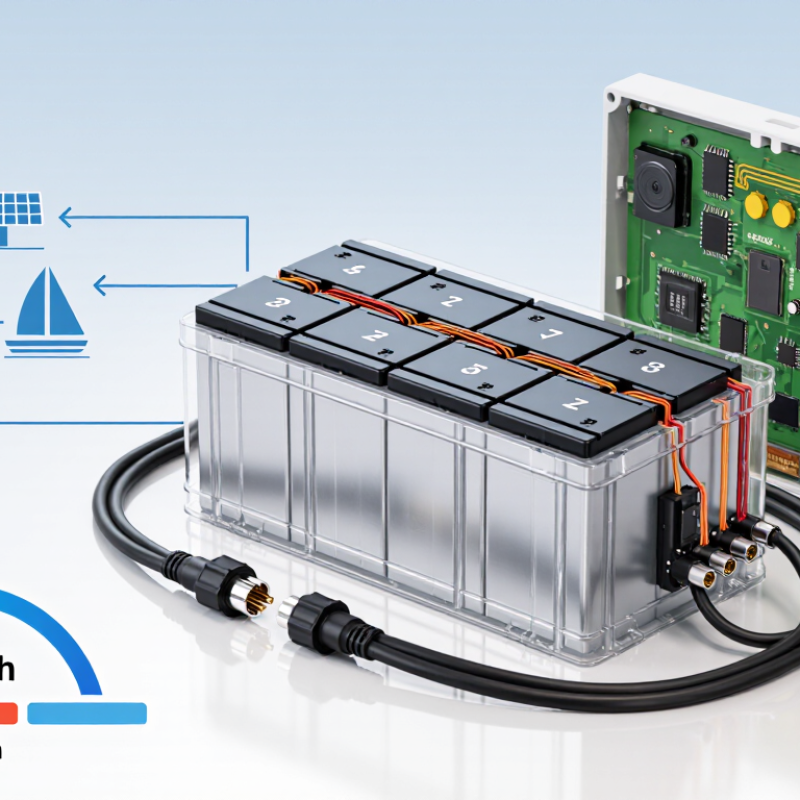
A 12.8V LiFePO4 battery is a rechargeable lithium iron phosphate battery with four cells connected in series. Each cell has a nominal voltage of about 3.2V. Together, they produce a 12.8V nominal system.
The number is not constant.
During charging, the voltage may rise above 14V. Under load, it gradually falls as stored energy is used. This chemistry uses lithium iron phosphate at the positive electrode, graphite at the negative electrode, and a liquid electrolyte between them. Lithium ions move between the electrodes during charging and discharging. That movement creates usable electrical current.
A battery management system, or BMS, monitors each cell. It can help prevent overcharging, excessive discharge, short circuits, and abnormal temperatures.
Still, a BMS is not a substitute for correct equipment. The charger should match the battery’s charging profile.
Compared with many lead-acid batteries, a 12.8V LiFePO4 battery usually offers lower weight, steadier voltage, and a longer usable cycle life. Its energy capacity is commonly estimated by multiplying voltage by ampere-hours.
For example, a 100Ah battery stores about 1,280Wh under nominal conditions.
Real performance varies.
Temperature matters, especially during charging below freezing. Capacity also changes with current, age, wiring, and battery quality. In practical testing, the printed capacity may not appear fully available because protection limits reserve some energy. That detail is easy to overlook. A careful installation should include suitable cables, ventilation, fuses, and regular inspection.

A 12.8V LiFePO4 battery usually contains four lithium iron phosphate cells connected in series. Each cell has a nominal voltage of about 3.2V. During discharge, lithium ions move from the graphite anode through the electrolyte toward the LiFePO4 cathode. Electrons cannot cross the electrolyte. They travel through the external circuit instead, powering a motor, lamp, or inverter.
That movement creates usable electrical current. The cathode’s iron-phosphate structure supports stable lithium insertion and removal, while the battery management system monitors voltage, temperature, and current. It can balance cells and disconnect the pack during unsafe conditions. The voltage is not constant. A fully charged pack may approach 14.4–14.6V, then remain near 13V through much of its working discharge.
The chemistry is increasingly established. The International Energy Agency reported that LFP batteries represented nearly 40% of electric-car batteries deployed globally in 2023. That figure reflects growing confidence in their thermal stability and material availability. Practical capacity still depends on temperature, current, wiring, and cell matching. Cold weather can reduce ion movement noticeably. It is an easy detail to underestimate.
A 100Ah pack stores roughly 1.28kWh under nominal conditions. Real output will be lower after conversion losses and protective cutoffs. The U.S. Department of Energy’s storage research emphasizes this difference between rated energy and delivered energy. Bench results are useful, but imperfect. A battery is a system, not merely four cells.
A 12.8V LiFePO4 battery usually contains four LiFePO4 cells connected in series. Each cell provides about 3.2V nominally. Together, they create the pack voltage used in many low-voltage systems. The voltage is not constant. A fully charged battery may reach about 14.4–14.6V, depending on the charging settings.
The battery management system, or BMS, is the electronic control center. It monitors each cell’s voltage and the pack temperature. It can disconnect charging during overvoltage conditions. It can also stop discharge during undervoltage, excessive current, or a short circuit. Some BMS units balance the cells, although passive balancing may work slowly. A BMS is not a charger. The charger still needs a suitable LiFePO4 charging profile.
Inside the pack, copper or nickel-plated busbars connect the cells with low resistance. Insulating sheets reduce the risk of accidental contact. Temperature sensors usually sit near the cells or power terminals. The enclosure protects the internal parts from vibration, dust, and moisture. Terminals transfer current to the external circuit, while a fuse may provide another layer of protection. In practical inspection, loose connections often cause more trouble than the cells themselves. That detail is easy to overlook. Cell matching, compression, and cable sizing also matter, but manufacturers do not always explain these choices clearly.
A 12.8V LiFePO4 battery uses four lithium iron phosphate cells connected in series. Each cell provides about 3.2V under normal conditions. Compared with lead-acid batteries, this chemistry offers stable voltage, lower weight, and useful capacity over many cycles. However, its performance depends heavily on the battery management system, or BMS.
The BMS acts like a continuous safety controller. It measures each cell’s voltage, pack current, and internal temperature several times per second. If one cell rises too high during charging, the BMS can disconnect the charger. If voltage drops too low, it can stop discharge before permanent damage occurs. Temperature protection matters too. Many systems block charging below freezing, because lithium plating can occur inside cold cells. That small detail is easy to overlook.
Cell balancing helps keep the four cells working together. Passive balancing usually releases a small amount of excess energy as heat near full charge. Active systems can move energy between cells, but they are more complex. In practical use, I would still pair the battery with a correctly configured charger, suitable cables, and an external fuse. The BMS is not a substitute for installation discipline. No protection system is perfect. A loose terminal, poor sensor placement, or inaccurate setting can reduce reliability. Regular checks can reveal warmth, swelling, unusual voltage differences, or unexpected shutdowns before they become serious problems.
A 12.8V LiFePO4 battery typically contains four 3.2V cells connected in series. The chart shows representative voltage points used by a Battery Management System (BMS) to monitor operating conditions, protect the cells, and maintain safe performance.
Values are typical reference points for a 4S LiFePO4 pack. Actual cutoff thresholds vary by cell design and BMS configuration. The BMS can disconnect charging or loads when voltage, temperature, or current exceeds safe limits.
A 12.8V LiFePO4 battery usually contains four 3.2V lithium iron phosphate cells connected in series. Its nominal voltage is 12.8V, while charging commonly reaches about 14.4–14.6V. A battery management system monitors voltage, temperature, and cell balance. It can disconnect the circuit during abnormal conditions. Four cells work together. The details matter.
These batteries are common in recreational vehicles, boats, fishing systems, and off-grid solar storage. Their stable chemistry, low weight, and strong cycle performance suit equipment that operates away from utility power. The International Energy Agency reported nearly 510 gigawatts of renewable capacity additions in 2023, with solar power providing about three-quarters of that growth. More small solar systems now need dependable daily storage. A 12.8V battery can store daytime energy and run lights, pumps, routers, or refrigeration after sunset.
They also appear in emergency backup units, electric mobility equipment, and remote monitoring stations. BloombergNEF’s 2024 battery price survey placed the average lithium-ion pack price at 115 dollars per kilowatt-hour, showing why storage economics continue to improve. However, pack price alone can mislead. Installation, protection hardware, cold-weather charging limits, and replacement planning also affect value. In a camper, for example, a 100Ah battery provides roughly 1.28kWh before system losses. That may run a compact refrigerator overnight, but heavy heating loads can empty it quickly. Real-world results depend on wiring, temperature, and honest load estimates.
| Data Dimension | Typical Value or Description | How It Works or Why It Matters |
|---|---|---|
| Battery Chemistry | Lithium iron phosphate (LiFePO4 or LFP) | Lithium ions move between the positive and negative electrodes during charging and discharging. The iron-phosphate cathode provides high thermal and chemical stability. |
| Nominal Voltage | 12.8 V | A 12.8 V battery normally contains four 3.2 V LFP cells connected in series. The actual voltage changes with state of charge and load. |
| Cell Configuration | 4S; four cells in series | Series connection increases voltage while the ampere-hour capacity remains approximately equal to that of one cell group. |
| Typical Full-Charge Voltage | Approximately 14.2–14.6 V, depending on the charging profile | A compatible charger raises each cell to roughly 3.55–3.65 V. The battery manufacturer’s charging limits should always take priority. |
| Common Capacity Range | Approximately 20–300 Ah for commonly available battery packs | Capacity determines how much energy the battery can store. Larger capacity generally means longer runtime, greater mass, and a higher purchase cost. |
| Energy Capacity Example | 12.8 V × 100 Ah ≈ 1,280 Wh, or 1.28 kWh nominally | Usable energy is lower than the nominal calculation because of the recommended depth of discharge, conversion losses, temperature, aging, and the battery management system. |
| Energy Calculation | Watt-hours (Wh) ≈ voltage (V) × capacity (Ah) | For practical sizing, multiply the calculated energy by the expected usable fraction and include inverter or wiring efficiency when applicable. |
| Discharge Voltage Behavior | Relatively flat voltage curve during most of the discharge cycle | Stable voltage helps equipment operate consistently, but voltage alone is not a precise state-of-charge indicator for LFP batteries. |
| Recommended Depth of Discharge | Often up to 80–100% depending on the battery design and service-life target | Using a shallower depth of discharge generally reduces stress and can help extend cycle life. Follow the specified limits for the particular battery. |
| Cycle Life | Commonly about 2,000–5,000 cycles under specified conditions | Cycle life depends on discharge depth, charge rate, temperature, storage conditions, and the manufacturer’s end-of-life definition. |
| Battery Management System (BMS) | Electronic protection and monitoring system | A BMS may monitor cell voltage and temperature, balance cells, and disconnect the pack during overcharge, over-discharge, excessive current, or overheating. |
| Charging Method | Constant-current/constant-voltage charging with an LFP-compatible charger | A charger designed for lead-acid batteries may not provide the correct voltage, termination behavior, or safety controls for an LFP battery. |
| Charging Temperature | Usually above 0°C unless the battery includes low-temperature charging protection | Charging below freezing can cause lithium plating and permanent damage. A heated battery or low-temperature charge cutoff may be required in cold environments. |
| Operating Temperature | Often approximately −20°C to 60°C for discharge; specifications vary | Available capacity and power can decrease at low temperatures, while high temperatures can accelerate aging. Always use the specified temperature limits. |
| Safety Characteristics | High thermal stability compared with many other lithium-ion chemistries | LFP is less prone to thermal runaway than some higher-energy lithium-ion chemistries, but correct fusing, wiring, charging, enclosure design, and BMS protection remain essential. |
| Weight Advantage | Generally lighter than a lead-acid battery with similar nominal energy | The battery can deliver more usable energy at a lower weight because it supports deeper discharge and has higher energy efficiency. |
| Efficiency | Often approximately 90–98% round-trip efficiency under suitable conditions | Efficiency varies with current, temperature, wiring, BMS operation, and charger or inverter losses. |
| Solar Energy Storage | Off-grid cabins, backup systems, portable solar generators, and small renewable-energy installations | The battery stores energy generated during the day and supplies DC loads or an inverter when solar power is unavailable. |
| Recreational Vehicles and Caravans | House batteries for lighting, refrigeration, communications, and small appliances | The 12.8 V format fits many existing 12 V electrical systems, although charging equipment and the vehicle’s alternator system may need compatibility checks. |
| Marine and Boat Systems | House loads, navigation equipment, electronics, lighting, and trolling motors | Low weight and stable voltage are useful on boats, but the enclosure must protect the battery from moisture, vibration, and incorrect installation. |
| Backup Power and UPS Systems | Emergency lighting, networking equipment, security systems, and communication devices | A 12.8 V battery can provide backup DC power directly or supply an inverter for AC equipment, subject to required power and runtime. |
| Mobility and Low-Speed Vehicles | Electric carts, mobility equipment, small utility vehicles, and low-speed transport systems | The battery can support repeated cycling, provided its continuous and peak current ratings match the motor controller and load. |
| Portable and Field Equipment | Outdoor lighting, monitoring devices, medical support equipment, and mobile workstations | High usable capacity and relatively low maintenance make LFP suitable where reliable portable power is needed. |
| Parallel Connection | Multiple compatible 12.8 V batteries connected in parallel | Parallel connection increases ampere-hour capacity and available current while keeping the nominal voltage near 12.8 V. Batteries should be matched and installed according to their instructions. |
| Basic Sizing Formula | Required capacity (Ah) ≈ load power (W) × operating time (h) ÷ system voltage (V) ÷ usable fraction | Add a design margin for inverter losses, cold temperatures, aging, starting currents, and unexpected loads. |
Note: Electrical limits, temperature ranges, charging voltages, current ratings, and safety requirements vary by battery design. Use the specifications supplied for the exact battery and application.