What is Lithium Iron Phosphate Battery and How Does It Work?
The Lithium Iron Phosphate Battery has gained significant attention in recent years. Experts highlight its advantages in energy storage. Dr. Sarah Mitchell, a leading authority in battery technology, states, "Lithium Iron Phosphate Batteries offer a unique balance of safety and efficiency." This emphasizes the battery's reliability.
These batteries play a crucial role in renewable energy systems and electric vehicles. Their stable chemistry makes them safer compared to other lithium batteries. Users appreciate their long cycle life and thermal stability. However, challenges exist. The energy density is lower than that of other lithium-ion types. This means larger battery sizes are required for the same energy output.
While Lithium Iron Phosphate Batteries are innovative, they also raise questions. Are they the most practical choice for every application? As the industry evolves, ongoing research is needed. Improvements can lead to better performance and wider adoption. A deeper understanding of these batteries will shape future technologies.

What is Lithium Iron Phosphate (LiFePO4) Battery?
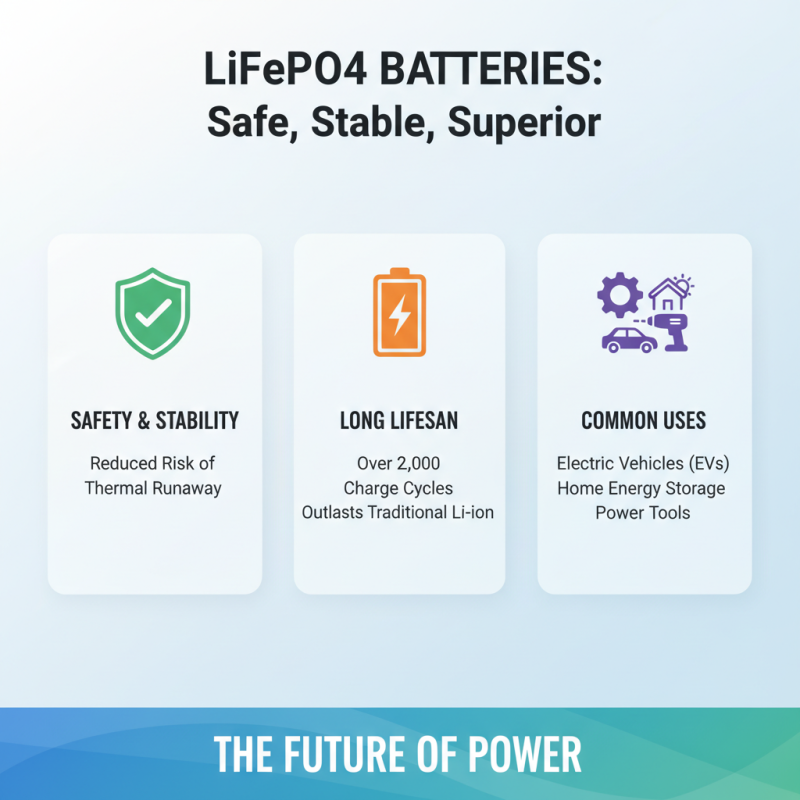
Lithium Iron Phosphate (LiFePO4) battery is a type of lithium battery. It is known for its safety and stability. This battery uses lithium iron phosphate as the cathode material, which offers several advantages. One key feature is its long lifespan. Many LiFePO4 batteries can last over 2000 charge cycles. This makes them reliable for long-term use.
In terms of performance, LiFePO4 batteries have a flat discharge curve. They maintain a steady voltage throughout their life cycle. This ensures consistent power delivery. Additionally, they are less prone to overheating compared to other lithium batteries. This increases their safety in various applications.
Tips: When choosing a LiFePO4 battery, ensure you understand its capacity and voltage ratings. Proper matching with your device is crucial. Additionally, check the temperature range suitable for the battery. Extreme temperatures can affect performance. Always consult with experts if you feel uncertain about your choice. A little bit of research can save you from making costly mistakes.
Performance Comparison of Lithium Iron Phosphate (LiFePO4) Batteries
This chart illustrates the performance characteristics of Lithium Iron Phosphate (LiFePO4) batteries in comparison to other common battery types over various parameters such as cycle life, charge time, and discharge rate.
Key Components of Lithium Iron Phosphate Batteries
Lithium Iron Phosphate (LiFePO4) batteries consist of essential components that contribute to their efficiency and safety. The cathode, made from lithium iron phosphate, is a key part. This material is stable, ensuring a long cycle life and thermal stability. In 2021, the global lithium iron phosphate battery market was valued at over $3 billion. Analysts expect a compound annual growth rate (CAGR) of 25% through 2028. That's significant growth.
The anode, typically made of graphite, plays a crucial role in charge storage. During discharge, lithium ions move from the anode to the cathode. Conversely, they return during charging. This movement establishes the battery's electrochemical performance. A recent study indicated that LiFePO4 batteries can achieve over 2000 cycles with 80% capacity retention. This is noteworthy compared to other lithium-ion technologies.
Electrolytes in these batteries are often lithium salts dissolved in organic solvents. Choosing the right electrolyte can enhance conductivity but also introduce safety risks. Some reports suggest that improper handling may lead to leakage or thermal issues. The balance of safety and performance remains a challenge for manufacturers.
What is Lithium Iron Phosphate Battery and How Does It Work? - Key Components of Lithium Iron Phosphate Batteries
| Component |
Description |
Function |
Material |
| Cathode |
Positive electrode that stores lithium ions |
Holds and releases lithium ions during charging and discharging |
Lithium Iron Phosphate (LiFePO4) |
| Anode |
Negative electrode that accepts lithium ions |
Interacts with lithium ions during charge and discharge cycle |
Graphite |
| Electrolyte |
Conductive medium that allows ionic movement |
Facilitates lithium ion transfer between cathode and anode |
Lithium salt in organic solvent |
| Separator |
Barrier between anode and cathode |
Prevents short circuits while allowing ion flow |
Polypropylene or polyethylene |
| Current Collectors |
Conductive material connected to electrodes |
Facilitates electron flow in and out of electrodes |
Aluminum (cathode) and copper (anode) |
How Lithium Iron Phosphate Batteries Function
Lithium Iron Phosphate (LiFePO4) batteries are gaining popularity. They are known for safety and long life. Understanding how they function is crucial to appreciate their benefits.
In essence, these batteries work through electrochemical reactions. Lithium ions move between the anode and cathode when charging and discharging. The anode usually consists of carbon, while the cathode is made of lithium iron phosphate. This structure allows for stable performance and prevents thermal runaway.
One limitation of LiFePO4 batteries is their lower energy density. Compared to other lithium batteries, they store less energy. This means they may not be suitable for all applications. Despite this, they excel in certain areas like electric vehicles and solar energy storage. Over time, the ability to handle high discharge rates can become a drawback, requiring careful management. Adjustments may be needed to optimize their use in various systems.
Advantages of Lithium Iron Phosphate Batteries
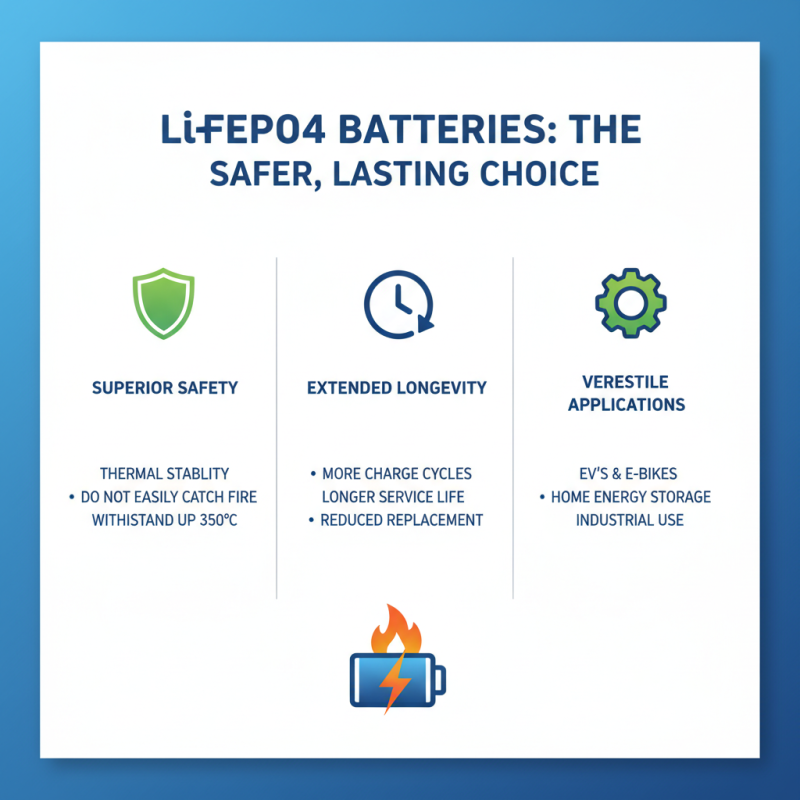
Lithium Iron Phosphate (LiFePO4) batteries are gaining popularity in various applications. They are known for their safety and longevity. One major advantage is their thermal stability. Unlike other lithium-ion batteries, LiFePO4 does not easily catch fire. This is crucial in high-temperature environments. Reports indicate that they can withstand temperatures up to 350°C, which is impressive.
Another significant benefit is their lifespan. LiFePO4 batteries can last more than 2,000 charge cycles. In contrast, more common lithium-ion batteries typically last around 500-1,000 cycles. This makes them cost-effective over time. Studies suggest that reduced replacement frequency can save users substantial money.
Moreover, they offer high discharge rates. This characteristic makes them suitable for applications requiring quick bursts of energy. However, this advantage can also lead to inefficiencies if not managed properly. While their performance is strong, reflections on optimizing usage patterns are necessary. Balancing efficiency and demand is vital for maximizing their potential benefits.
Common Applications and Uses of LiFePO4 Batteries
Lithium Iron Phosphate (LiFePO4) batteries are gaining popularity due to their safety and stability. Commonly used in electric vehicles (EVs), energy storage systems, and power tools, these batteries deliver excellent performance. They have a longer lifespan than traditional lithium-ion batteries. Reports indicate that LiFePO4 batteries can last over 2,000 charge cycles.
In the renewable energy sector, LiFePO4 batteries play a crucial role. They contribute to solar energy storage systems, enabling households and businesses to harness solar power efficiently. Their ability to withstand high temperatures makes them suitable for outdoor applications. Moreover, due to their low self-discharge rate, they remain charged for extended periods.
Tips: When choosing LiFePO4 batteries, consider the voltage and capacity carefully. Proper sizing ensures optimal performance. Always inspect the batteries for any signs of wear, which can affect safety and functionality.
LiFePO4 also finds its way into electric bicycles and scooters. However, these applications face challenges such as weight and volume. A balance between energy density and practicality is essential. Users must be open to innovation as the technology evolves.



 Tina - International Sales Director