The Best 25.6v Lifepo4 Battery Options for Your Energy Needs?
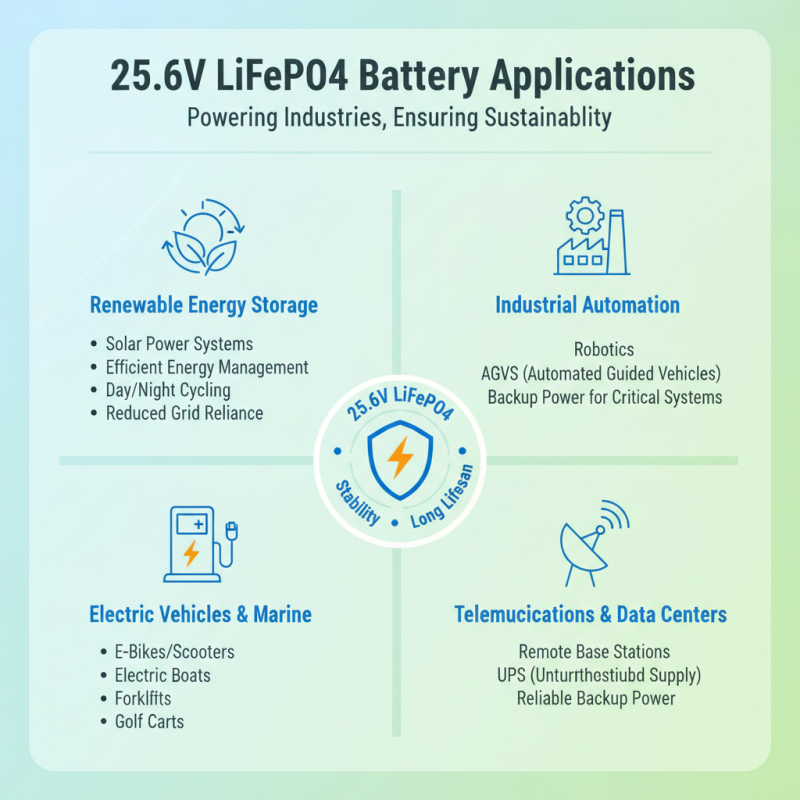
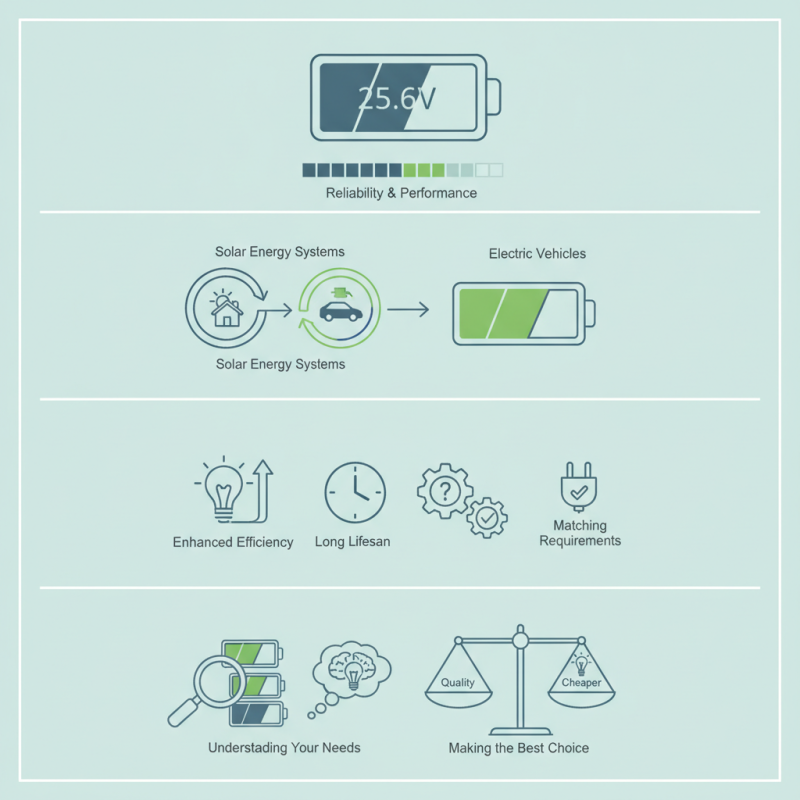
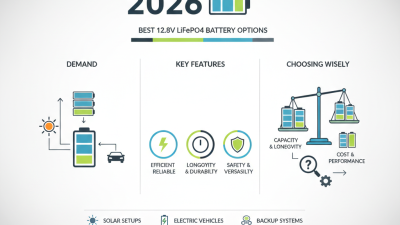
Choosing the right power source for your needs can be challenging. The 25.6v Lifepo4 battery stands out in this landscape. It is known for its reliability and performance. Many users have turned to these batteries for various applications. From solar energy systems to electric vehicles, they cover a wide range.
With advancements in technology, the 25.6v Lifepo4 battery offers enhanced efficiency. They are lightweight and have a long lifespan. However, it’s essential to ensure compatibility with your devices. Not every product on the market matches your requirements. This leads to potential disappointment if not researched properly.
Investing in a quality 25.6v Lifepo4 battery is crucial. Different brands offer various features, so understanding your needs is vital. Take time to compare your options. There may be hidden issues in cheaper models. They might not provide the performance you expect. Reflecting on your energy needs will guide you to the best choice.
The Advantages of 25.6V LiFePO4 Batteries for Energy Storage
25.6V LiFePO4 batteries stand out for energy storage. They offer remarkable safety and long life. This chemistry minimizes fire risks, unlike traditional lithium batteries. Moreover, they can endure high temperatures without significant capacity loss. Many users appreciate their stability in various conditions.
These batteries also provide high energy density. That means they pack more power in a smaller space. Users can enjoy longer run times, benefiting off-grid setups. They typically last for thousands of charge cycles. This longevity reduces the need for frequent replacements, saving money over time.
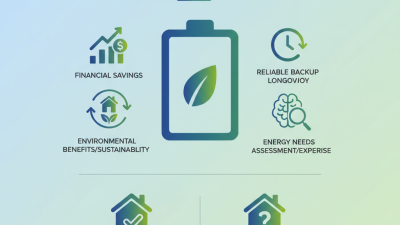
However, not all installations benefit equally. The upfront cost can be higher than lead-acid batteries. Some might question if the investment is worthwhile. Balancing initial costs and long-term savings is essential. Understanding your specific energy needs helps in making informed choices.
Key Specifications and Features of Top 25.6V LiFePO4 Batteries
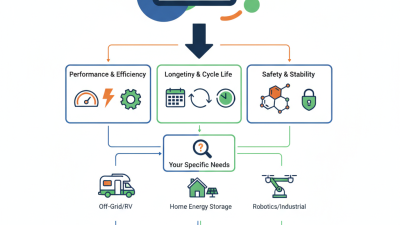
When exploring 25.6V LiFePO4 batteries, understanding key specifications is essential. These batteries typically offer high energy density and cycle life. Most importantly, they maintain stable performance throughout their lifespan. They can often reach up to 2,000 charge cycles, providing a reliable energy source for various applications.
Many reports indicate that LiFePO4 batteries have a thermal stability advantage. They do not combust easily, unlike some lithium-ion alternatives. This makes them a safer choice for energy storage systems. Additionally, the operating temperature range is usually wider, making them suitable for diverse environments.
Tip: Always assess your energy demand before selecting a battery. Matching the capacity with your usage prevents overuse and prolongs battery life.
You may notice that some models have different discharge rates. This can impact performance based on your specific needs. A higher discharge rate can be helpful for high-power applications. However, consider the balance between discharge rate and lifespan.
Tip: Regularly monitor battery health to catch potential issues early. This can save costs and enhance reliability in the long run.
The Best 25.6v Lifepo4 Battery Options for Your Energy Needs
| Model |
Capacity (Ah) |
Weight (kg) |
Dimensions (mm) |
Cycle Life |
Warranty (Years) |
| Battery A |
50 |
15 |
350 x 190 x 240 |
2000 |
5 |
| Battery B |
100 |
25 |
480 x 220 x 210 |
3000 |
7 |
| Battery C |
75 |
18 |
375 x 190 x 230 |
2500 |
5 |
| Battery D |
120 |
28 |
500 x 230 x 240 |
3500 |
10 |
| Battery E |
60 |
20 |
385 x 190 x 210 |
2200 |
6 |
Comparative Analysis of Performance and Lifespan in LiFePO4 Options
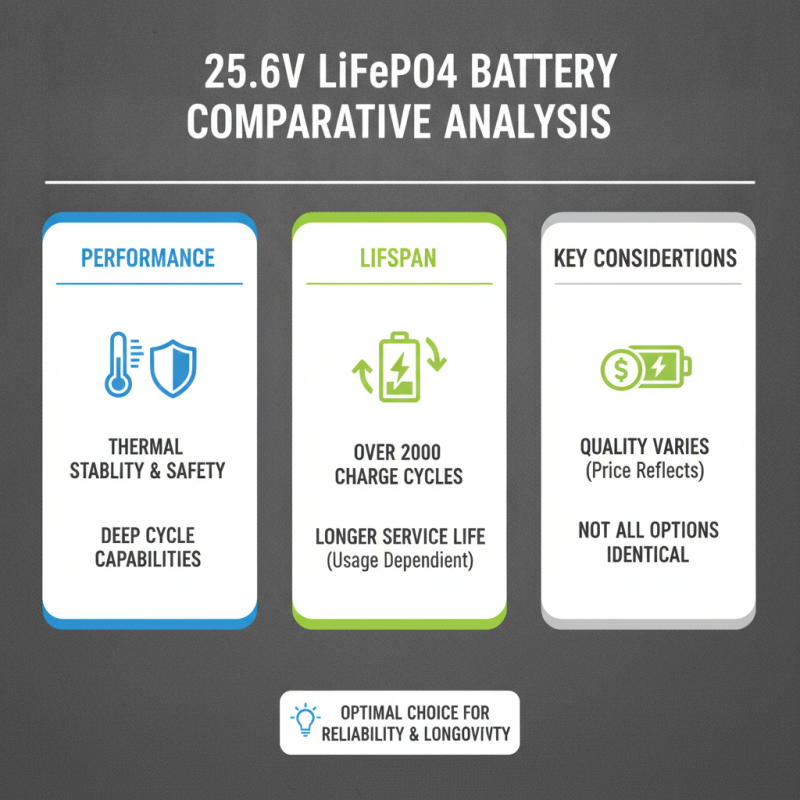
When considering a 25.6V LiFePO4 battery, performance and lifespan are critical factors. The chemistry of LiFePO4 batteries often leads to superior thermal stability and safety. They provide deep cycle capabilities, allowing for a longer service life. Typically, these batteries can withstand over 2000 charge cycles, depending on usage and care. However, not all options perform identically, and price may reflect quality.
Pay attention to cycle performance. Some batteries may not deliver their promised lifespan under heavy loads. It’s essential to evaluate how your energy needs align with the battery specifications. Real-world testing can reveal discrepancies in theoretical performance. Look for user reviews that detail longevity and reliability, rather than just specifications.
Tip: Monitor battery temperature during use. Extreme heat can shorten lifespan. Make sure to provide adequate ventilation. Charging habits also influence performance. Avoid deep discharges whenever possible.
Choosing the right battery involves understanding chemistry and application. Always compare multiple products. Seek out detailed, unbiased reviews from trusted sources. A well-informed decision can save money and improve energy efficiency in the long term.
Cost-Benefit Assessment: 25.6V LiFePO4 Batteries vs. Other Lithium Types
When assessing 25.6V LiFePO4 batteries, it's crucial to weigh their cost against other lithium options. LiFePO4 batteries stand out for their safety and thermal stability. They usually have a longer lifespan compared to traditional lithium-ion batteries. However, they might come at a higher initial investment, which can be a pivotal factor for many users.
In terms of performance, 25.6V LiFePO4 batteries deliver consistent power output. Their discharge rates are remarkable, making them ideal for energy-intensive applications. Some may find the charging times longer than their lithium-ion counterparts. This can be frustrating for those who need quick turnaround.
Analyzing total cost over the battery's lifetime reveals that LiFePO4 can be more economical in the long run, despite the upfront costs.
It's essential to consider how often you use your energy system. Occasional users might not benefit as much from investing in a LiFePO4 option. On the other hand, for regular use, the reliability offered might justify the price. Ultimately, the decision comes down to balancing immediate costs with long-term benefits. Each user's unique situation informs which battery type will meet their needs best.




 Tina - International Sales Director