Choosing among the 2026 Best Lithium Iron Phosphate Battery Suppliers requires more than comparing prices or advertised capacity. A Lithium Iron Phosphate Battery can offer strong cycle life and thermal stability, but real-world performance depends on cell quality, battery management, operating temperature, and installation. A specification sheet cannot tell the whole story.
Battery scientist Dr. Shirley Meng has stressed the importance of advancing battery materials and validating performance; put simply, chemistry matters, but testing matters too. This is a paraphrase, not a direct quotation. For buyers, that means asking suppliers for independent test results, warranty terms, safety documentation, and clear details about cycle-life conditions. Look closely at usable capacity, charge limits, and support arrangements. Ask who handles a fault after installation.
The shortlist in this guide considers suppliers across residential storage, commercial systems, and other applications. It examines product consistency, technical transparency, manufacturing capability, and after-sales service. A supplier may look impressive on paper. Not always in practice. Even strong products can disappoint when sizing is wrong or support is slow. Some details remain difficult to compare because suppliers test and report performance differently. That deserves scrutiny. Use the comparisons as a starting point, then match each supplier’s evidence and product design to your actual energy needs.
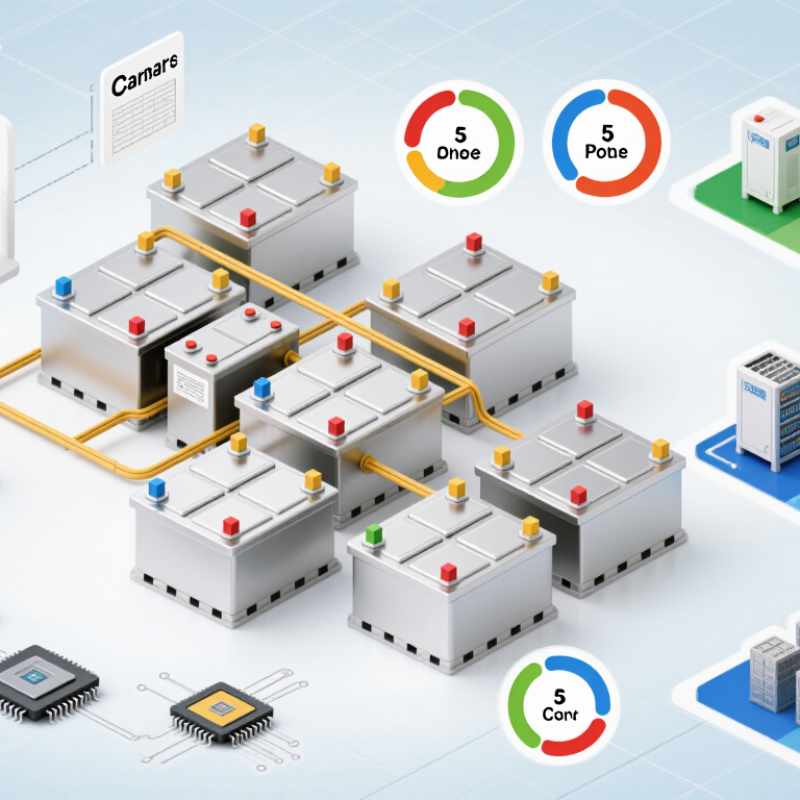
Lithium iron phosphate batteries use a stable cathode chemistry based on lithium, iron, and phosphate. Their structure resists oxygen release during overheating, improving thermal safety. LFP cells also tolerate frequent charging and discharging with relatively slow capacity loss. In practical testing, temperature, charging speed, and storage conditions strongly affect results. No chemistry is perfect. LFP usually provides less energy density than nickel-rich alternatives, so larger packs may be necessary.
These batteries suit electric buses, solar storage, backup power systems, marine equipment, and industrial vehicles. A home storage pack may sit in a garage, cycle every evening, and support lights during an outage. Proper battery management remains essential. It should monitor cell voltage, temperature, current, and balancing performance. Cold charging can damage cells, especially when temperatures fall below freezing. That detail is easy to overlook.
When assessing suppliers in 2026, buyers should examine test reports, production traceability, warranty terms, and field-service capability. Ask for cycle-life data under clearly stated conditions, not only attractive laboratory figures. Factory audits can reveal welding quality, insulation practices, and moisture control. Reliable suppliers explain limitations instead of promising unlimited performance. Certifications should match the intended market and application. Delivery consistency matters too. A low price means little if replacement cells arrive late or show uneven capacity. Supplier evaluation is still partly judgment. Data helps, but real operating feedback exposes weaknesses that brochures often miss.
Lithium iron phosphate batteries are widely used in electric vehicles, energy storage systems, commercial backup power, and industrial equipment. Their strong thermal stability, long service life, and lower reliance on nickel and cobalt make them suitable for safety-focused applications.
The chart shows representative cycle-life values to approximately 80% remaining capacity. Actual performance depends on cell design, operating temperature, charge rate, depth of discharge, and battery-management-system settings.
Choosing the best lithium iron phosphate battery supplier in 2026 requires more than comparing prices. Buyers should examine cell quality, manufacturing controls, and real operating results. A supplier should provide capacity test records, cycle-life data, and thermal performance at different temperatures. Numbers need context. Ask whether tests used full charge and discharge cycles, controlled temperatures, or laboratory-only conditions.
Safety evidence is equally important. Review battery management system functions, overcharge protection, short-circuit response, and fire prevention procedures. Independent certifications and factory audit reports add credibility, but documents should match the actual production site. Traceable serial numbers, inspection records, and clear warranty terms show stronger quality discipline. A polished datasheet can still hide weak field performance.
Supply reliability also matters. Evaluate production capacity, lead times, spare-part access, and technical support after installation. Suppliers should explain how they handle capacity loss, defective modules, and software updates. Request references from projects with similar loads, weather, and daily cycling patterns. Total cost includes transport, installation, maintenance, and replacement risk, not only the purchase price. No supplier is perfect. Some test data may be incomplete, while delivery promises may change during demand surges. A careful buyer should record these uncertainties, challenge optimistic claims, and compare evidence before signing a long-term agreement.
2026 Best Lithium Iron Phosphate Battery Suppliers
Top Lithium Iron Phosphate Battery Suppliers by Market Segment
The best supplier depends on the application, not only on cell capacity or price. For electric vehicles, evaluate cycle life, thermal control, charging performance, and automotive-grade traceability. Suppliers serving this segment should provide test reports, production data, and stable quality across large batches. A small variation between cells can affect vehicle range and safety.
For residential and commercial energy storage, focus on usable capacity, inverter compatibility, warranty terms, and remote monitoring. A supplier with strong system integration experience can reduce installation problems. Utility-scale projects require deeper evidence, including degradation models, fire protection planning, container design, and replacement support. Marine and industrial buyers may value vibration resistance, compact housing, and reliable low-temperature operation more than maximum energy density. Portable power products need light weight, clear battery management, and dependable connectors.
Tips: Ask for recent cycle-test results under conditions similar to your project. Check whether warranty claims are handled locally. Request sample cells or a pilot module before committing to a large order. Compare usable energy, not advertised capacity. Also, question unusually low prices; savings can hide weaker materials, limited testing, or delayed support.
Supplier reviews should include factory audits, documentation checks, and direct technical discussions. Do not rely on brochures alone. Performance figures may change with temperature, charging speed, and storage conditions. Some buyers overlook recycling arrangements and spare-part availability. That mistake can become expensive later.
In 2026, capable lithium iron phosphate battery suppliers should prove more than production volume. Their factories need controlled cell matching, automated welding, and documented end-of-line testing. Experienced teams measure voltage deviation, insulation resistance, torque values, and BMS communication before shipment. Small details matter.
Certification should match the destination market and battery application. Ask for current reports covering UN 38.3 transport testing and relevant IEC safety standards, such as IEC 62619. ISO 9001 can support process consistency, but it does not replace product testing. Reliable suppliers provide traceable serial numbers, calibration records, and sample test data. Independent laboratory verification adds credibility.
Customization is more than printing a new label. Suppliers should adjust pack voltage, capacity, enclosure dimensions, connectors, communication protocols, and thermal design. CAN or RS485 settings must be tested with the customer’s equipment. Outdoor systems may require improved sealing and low-temperature protection. No factory gets every batch perfect. That is why pilot builds, aging tests, and failure analysis deserve serious attention. A supplier should explain limitations clearly, including lead times, warranty conditions, replacement procedures, and software update controls. Vague promises are a warning sign. Field experience often reveals weaknesses that polished brochures hide.
| Capability Area | What to Assess | Common Supplier Capability or Evidence | Buyer Verification Questions |
|---|---|---|---|
| Cell manufacturing | Whether cells are produced in-house or sourced from qualified cell manufacturers. | Documented cell sourcing, incoming inspection, lot traceability, and controls for cell matching and grading. | Are cells manufactured in-house? Can the supplier identify the cell maker, production lot, and applicable cell specifications? |
| Battery-pack assembly | Assembly controls for modules, packs, busbars, wiring, and enclosures. | Controlled assembly instructions, inspection records, electrical checks, and serial-number traceability. | Which assembly steps are performed at the supplier’s facility, and what inspection records are supplied with each shipment? |
| Battery management system | Protection, monitoring, balancing, and communications functions. | Pack-level BMS configuration may include over/under-voltage, overcurrent, and temperature protections, with balancing and communications specified by the design. | Request the BMS data sheet, protection thresholds, communication protocol, firmware change controls, and fault-response description. |
| Manufacturing quality system | Process consistency, nonconformance control, corrective action, and supplier oversight. | A quality-management system may be certified to ISO 9001; certification scope, issuing body, and validity should be checked. | Can the supplier provide a current certificate and show that its scope covers the relevant manufacturing or assembly site? |
| Product safety testing | Testing and certification applicable to the intended battery type and end use. | IEC 62619 addresses safety requirements for secondary lithium cells and batteries used in industrial applications. Applicability depends on product design and use. | Request the complete test report or certificate for the exact cell or battery model, including model identifiers and tested configuration. |
| Transport compliance | Evidence required for shipping lithium batteries by the intended transport mode. | UN Manual of Tests and Criteria, subsection 38.3, sets out tests for lithium cells and batteries. A UN 38.3 test summary is commonly requested for transport documentation. | Does the test summary match the shipped model and configuration? Confirm packaging, marking, and documentation requirements with the carrier and applicable regulations. |
| Market-specific conformity | Regulatory requirements in each destination market and application. | Requirements can differ by jurisdiction, product category, installation, and system design; a certificate for one market does not automatically establish compliance in another. | Ask for a compliance matrix identifying applicable regulations, standards, product models, test evidence, and responsible legal entity. |
| Electrical customization | Pack voltage, capacity, current limits, series/parallel arrangement, and connectors. | These are design-dependent options that should be confirmed against the cell configuration, BMS limits, load profile, and installation constraints. | Can the supplier provide a controlled specification showing nominal and operating limits, connector pinout, and protection settings? |
| Mechanical customization | Enclosure, dimensions, mounting, ingress protection, and thermal management. | Custom dimensions and enclosures may be feasible, but environmental ratings require evidence for the final assembled product and configuration. | Request dimensioned drawings, material details, environmental test reports, and confirmation that the tested enclosure matches the production design. |
| Communications and integration | Interfaces, data points, protocol implementation, and system compatibility. | Interfaces such as CAN or RS-485 may be offered depending on the BMS and project; protocol support should not be assumed from connector type alone. | Request the protocol specification, register or message map, integration test results, and firmware-version compatibility details. |
| Validation and production release | How engineering changes and sample testing are managed before volume production. | A documented sample approval, design-change process, and production release criteria help ensure shipped units match the approved configuration. | What triggers revalidation, and how are changes to cells, BMS, materials, software, or manufacturing site communicated? |
| Warranty and service | Coverage terms, operating limits, service process, and end-of-life support. | Warranty duration and exclusions are supplier- and application-specific; clear operating conditions and a defined claims process are important. | Request the written warranty, permitted operating conditions, claim procedure, repair or replacement policy, and spare-parts availability. |
Evaluation note: This is a supplier-screening framework, not a ranking or a claim about any specific supplier. Capabilities and certification status vary by facility, model, and application. Verify current certificates, test reports, and product documentation directly before purchasing.
Choosing an LFP battery supplier starts with your actual operating conditions, not a catalog headline. Estimate daily energy use, peak discharge, charging time, and the lowest expected temperature. A battery for a workshop backup system may need different discharge limits from one used in a mobile installation. Be specific.
Ask for test data that matches the proposed cell and pack configuration. Useful details include capacity at stated temperatures, cycle-life test conditions, continuous and peak current limits, and protection features built into the battery management system. Cycle-life numbers without a defined depth of discharge or test temperature tell you little. Request traceability records and confirm that the documentation applies to the units you will receive, not just a similar product.
Compare warranty terms carefully. Check what counts as normal capacity loss, how claims are handled, and whether technical support can help with installation and troubleshooting. Ask how the supplier manages production changes and replacement parts. A polished specification sheet is not enough. Speak with a technical contact and see whether answers remain clear when you ask about limits. I have learned that procurement can focus too heavily on price; that is easy to do, and not always wise. A slightly higher upfront cost may be worthwhile if testing, documentation, and support are dependable.